Fertility, Weight loss drugs
Should You Take Ozempic If You’re Trying to Conceive?
Before you read:
- GLP-1 drugs (Ozempic, Wegovy, Mounjaro) are not approved for use during pregnancy — stop before you start trying
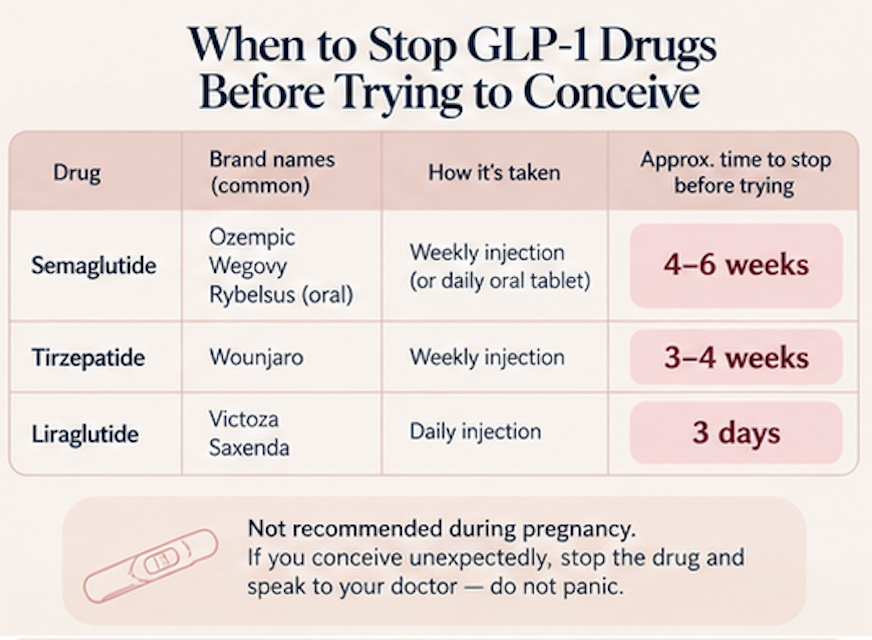
- For semaglutide (Ozempic/Wegovy), the recommended washout is at least 4–6 weeks before trying to conceive
- The "Ozempic baby boom" is real — weight loss restores ovulation, and women are getting pregnant unintentionally
- For women with PCOS and obesity, GLP-1s may genuinely help — but the fertility benefit comes from what they do to insulin, not from the drug itself
- If you are lean, do not have PCOS, and are already ovulating: these drugs are not a fertility treatment for you
What GLP-1 Drugs Actually Do
GLP-1 stands for glucagon-like peptide-1. It is a hormone your gut releases after you eat. It tells the pancreas to release insulin, tells the liver to slow glucose production, slows stomach emptying so you feel full longer, and signals the brain to reduce appetite.
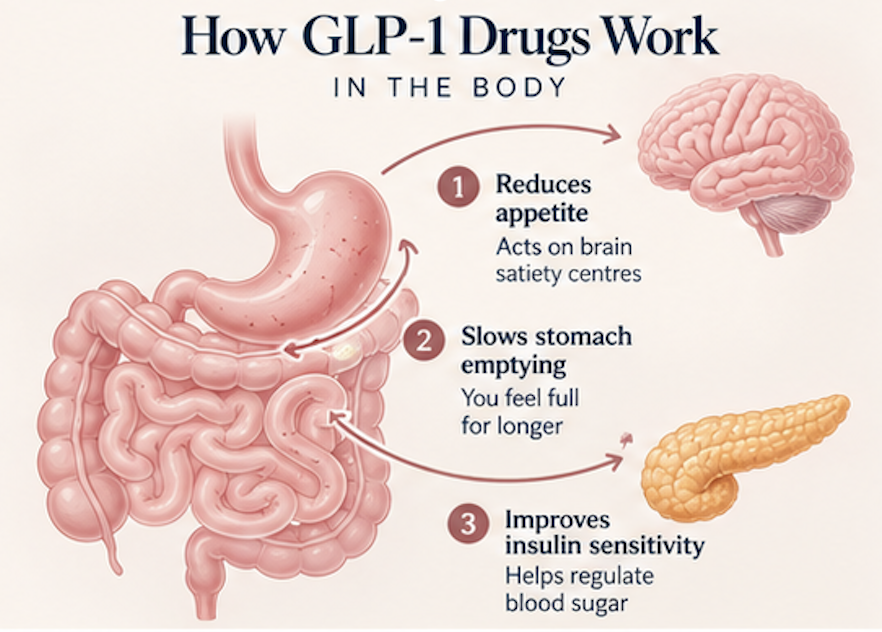
GLP-1 receptor agonist drugs mimic this hormone — but at much higher levels than your body produces naturally, and for much longer. The result is powerful appetite suppression, slower gastric emptying, significantly improved insulin sensitivity, and substantial weight loss in most people who take them.
The drugs you are most likely to encounter:

Why They Might Help Fertility — And Why They Might Not
For women with PCOS and insulin resistance — particularly those with obesity — the mechanism is straightforward. Insulin resistance is the core driver of PCOS for most women. It causes the ovaries to overproduce androgens, which disrupts follicle development and stops ovulation. GLP-1 drugs improve insulin sensitivity significantly. Better insulin sensitivity means lower androgen levels. Lower androgens mean the ovaries can ovulate normally again.
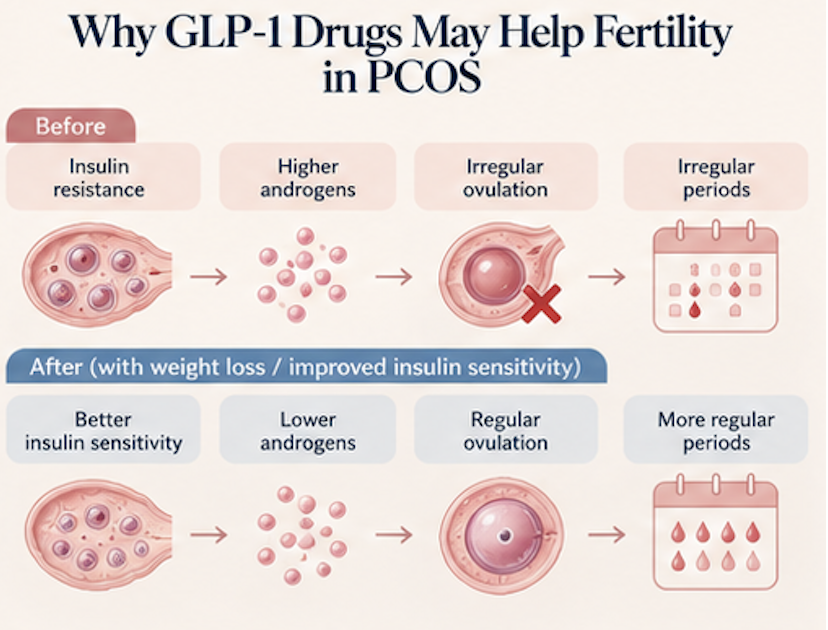
This is why the "Ozempic baby boom" is happening. Women who had not ovulated regularly in years — because of PCOS or obesity-related anovulation — started ovulating again on GLP-1 drugs. Their contraception, which worked fine when they were not ovulating, suddenly was not sufficient.
There is also the effect of weight loss itself. In women with PCOS and significant obesity, even a 5–10% reduction in body weight restores ovulation in a meaningful proportion of women. GLP-1 drugs produce that weight loss faster and more consistently than lifestyle changes alone.
The Ozempic baby boom is not a myth. It is what happens when insulin resistance improves and ovulation returns.
Here is the part that gets left out of the social media conversation.
- GLP-1 drugs cause rapid, significant weight loss. Rapid weight loss — regardless of how it is achieved — has its own effects on fertility. It can temporarily disrupt the hypothalamic-pituitary-ovarian axis.
- It reduces nutrient availability to developing follicles. The eggs you ovulate today were recruited 90 days ago. - What you eat, and what your body has available metabolically, during those 90 days affects egg quality. Severe caloric restriction during follicle development is not benign.
- Most fertility specialists recommend stabilising your weight before an IVF cycle — not actively losing weight during stimulation.
- The fertility benefit of GLP-1 drugs comes from improving insulin sensitivity and enabling weight loss before treatment — not from taking the drug during treatment. Once you are at a better metabolic starting point, the goal is to stabilise and then proceed.
What Happens If You Get Pregnant on Ozempic
This is the question that matters most, and it is the one with the least data.
Animal studies show that semaglutide causes birth defects and fetal growth restriction at high doses in rodents and rabbits. The important context: those doses were far higher than what humans take, and the effects are thought to be largely due to severe maternal weight loss and nutrient restriction, not direct drug toxicity to the fetus. The human data we have is limited but not alarming.
A Danish study followed 32 pregnancies with first-trimester semaglutide exposure. It found no increase in major birth defects. It did find slightly more preterm births, larger-than-expected babies, neonatal low blood sugar, and jaundice — but these rates were similar to insulin-treated pregnancies in diabetic women, and the sample was too small to draw firm conclusions.
A larger prospective cohort of 168 pregnancies exposed to GLP-1 drugs found no significant increase in miscarriage or birth defects.
Here is the bottom line: we do not have good long-term data. We do not have neurodevelopmental follow-up of children exposed in utero. The drug manufacturers do not recommend use in pregnancy. The appropriate approach is to stop before you start trying, with enough time for the drug to clear your system.
If you got pregnant accidentally while on Ozempic — stop the drug immediately. This is not a reason to panic, but tell your obstetrician and fertility specialist so they can monitor the pregnancy appropriately.
The Practical Decision Framework
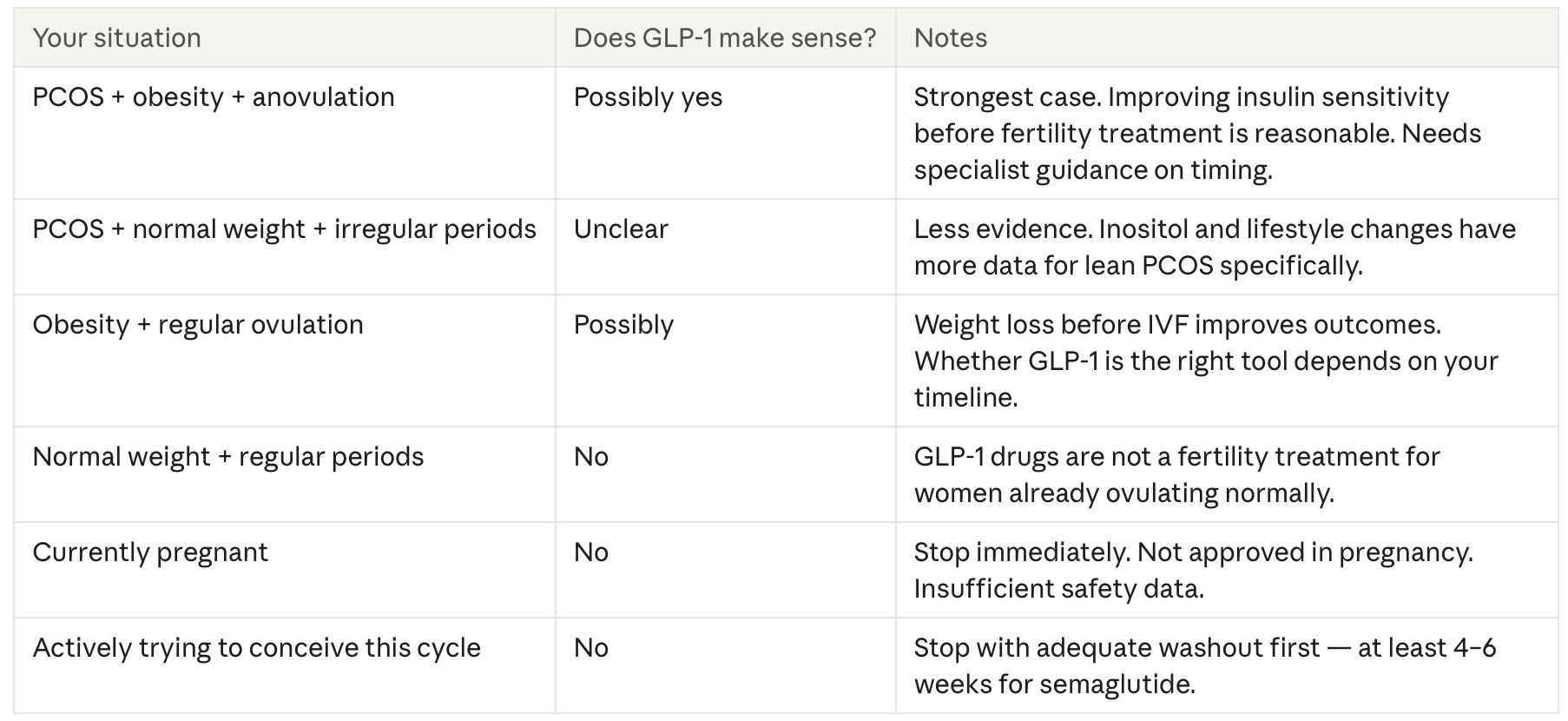
What About Contraception While on GLP-1s
This is genuinely urgent for any woman on these drugs who is not trying to conceive. GLP-1 drugs slow gastric emptying — food and everything else in your stomach moves through more slowly. This reduces the absorption of oral contraceptive pills. The pill relies on being absorbed at the right rate. When gastric emptying is slowed significantly, absorption is less reliable.
This does not mean the pill stops working entirely. But it is a real pharmacological interaction that both your prescribing doctor and your gynaecologist should know about. If you are on a GLP-1 drug and relying on oral contraceptives, discuss a barrier method as backup, or switch to a non-oral method — an IUD, implant, or injectable — that is not affected by gastric absorption.
The doctor prescribing your GLP-1 and your gynaecologist need to know about each other. This interaction is underrecognised and is part of why unintended pregnancies are being reported in women on these drugs.
Alternatives Worth Knowing About
If you have PCOS with insulin resistance and are not on GLP-1s, these are the evidence-based alternatives for managing insulin resistance while trying to conceive.
Metformin :
The oldest and most studied insulin sensitiser for PCOS. Solid safety record in pregnancy — used in gestational diabetes, and some fertility specialists continue it through the first trimester. Less effective for weight loss than GLP-1 drugs but far more long-term data for fertility use. First-line for many women with PCOS and insulin resistance.
Inositol (Myo + D-chiro, 40:1 ratio):
The supplement with the strongest evidence for PCOS-specific insulin resistance. Multiple randomised controlled trials show improvements in insulin sensitivity, androgen levels, and ovulation rates. Safe to continue while trying to conceive and during early pregnancy. Lifestyle — Movement and food composition remain the most effective tools for improving insulin sensitivity without drug side effects or washout periods. The limitation is that lifestyle changes alone are often insufficient in severe insulin resistance or significant obesity. GLP-1 drugs and metformin exist precisely because lifestyle sometimes needs support — not because lifestyle does not work.
A Word of Honesty — Because You Deserve It
GLP-1 drugs are genuinely exciting in metabolic medicine. For the right woman — PCOS with significant insulin resistance and obesity, struggling to ovulate — they represent a real tool that can improve her fertility starting point in a way that was not available five years ago.
But the social media version of this story is incomplete. It skips the washout period. It skips the contraception interaction. It skips the fact that these drugs have not been studied in pregnant women, and that the animal data — while not directly translatable — exists for a reason.
The question to ask is not “should I take Ozempic to get pregnant?” The question is: what is driving my fertility problem, and is this drug addressing the right thing? For most women, the answer requires a proper workup — hormone testing, an insulin level, an ultrasound — not a trend on Instagram.
If you have PCOS, are not ovulating, and have been told you need to lose weight before IVF: GLP-1s are a conversation worth having with your specialist. For everyone else — the drug is doing something real in your body. Make sure it is the right something.
References :
1. Alfaiz AA, et al. GLP-1 receptor agonists and preconception planning. Ann Med Surg. 2025.
2. Teede HJ, et al. Recommendations from the 2023 international evidence-based guideline for PCOS. Fertil Steril. 2023;120(4):767–793.
3. GLP-1 receptor agonists and fertility: what is known so far? PMC review. 2025.
4. Novo Nordisk. Ozempic (semaglutide) prescribing information. FDA label, updated 2024.
5. Winther KH, et al. Semaglutide exposure in early pregnancy: Danish cohort study of 32 cases. 2024.
6. Moran LJ, et al. Dietary composition in restoring reproductive physiology in overweight women with PCOS. J Clin Endocrinol Metab. 2003.
7. Unfer V, et al. Myo-inositol effects in women with PCOS: a meta-analysis. Endocr Connect. 2017.
8. Legro RS, et al. Metformin and miscarriage risk in PCOS. J Clin Endocrinol Metab. 2007.
Last reviewed: 20/10/2026
Have a question this raised?
The best place for anything specific to you is a consultation, in Mumbai or by video across India.