Fertility Diet, What to eat
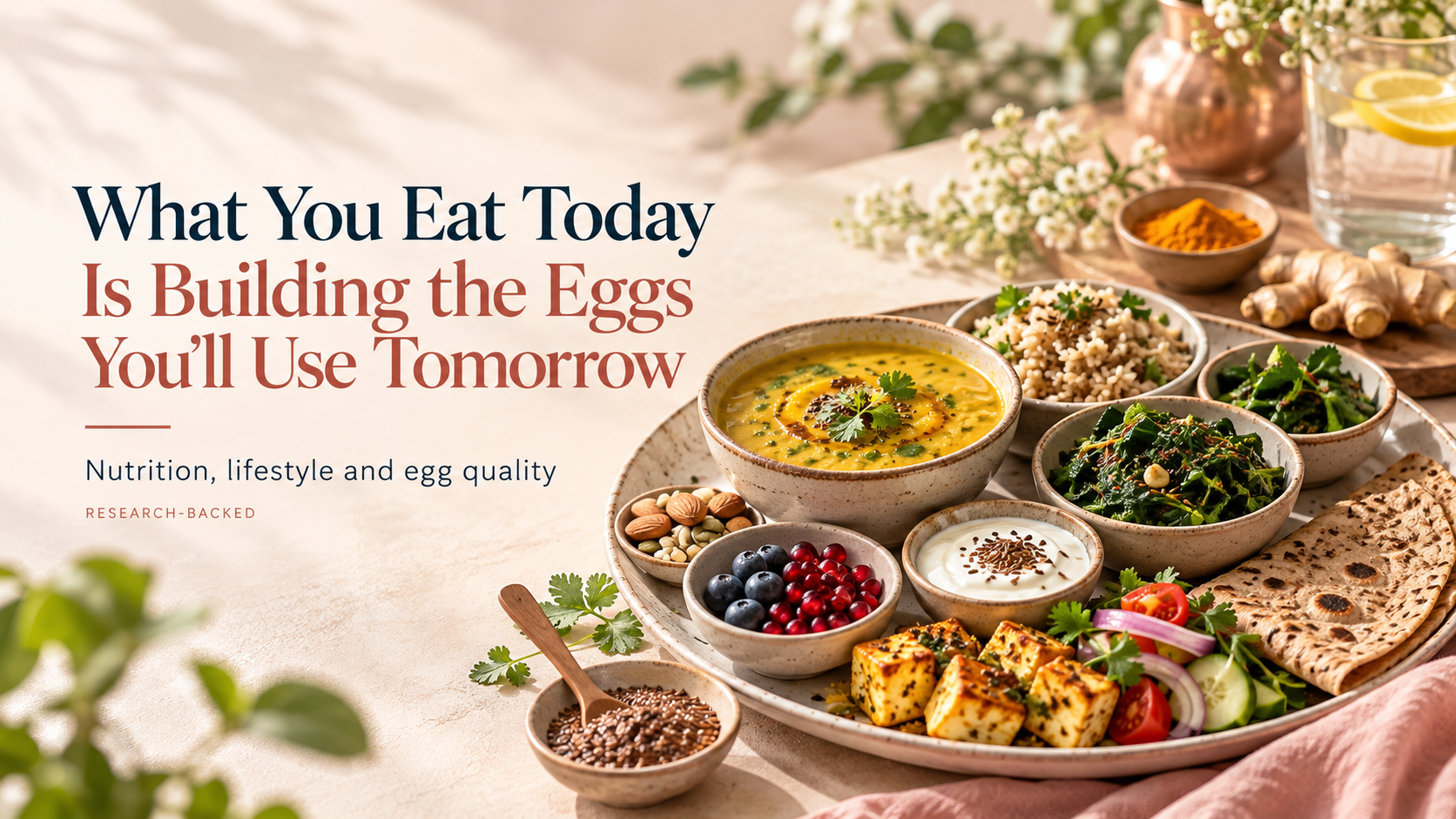
What You Eat Today Is Building the Eggs You'll Use Tomorrow
Before you read:
- Egg quality is built over months, not days. Diet and supplement changes made weeks before a fertility cycle have very little impact — the groundwork needs to be laid much earlier.
- Oxidative stress is one of the biggest silent threats to egg quality, and what you eat either adds to it or helps fight it.
- Supplements like CoQ10, folate, Vitamin D, and omega-3 fatty acids have the most evidence behind them for fertility support.
- Moderate, regular movement is fertility-friendly. Too little and too much are both problems.
- None of this is an assurance. These are levers that reduce risk and create better conditions — they are not a replacement for medical care.
---
Let me be straightforward with you about something I see often in my practice: women who come to me wanting to do an egg freezing cycle or IVF, and who start making changes to their diet and supplements the month before retrieval, expecting it to meaningfully change their outcomes.
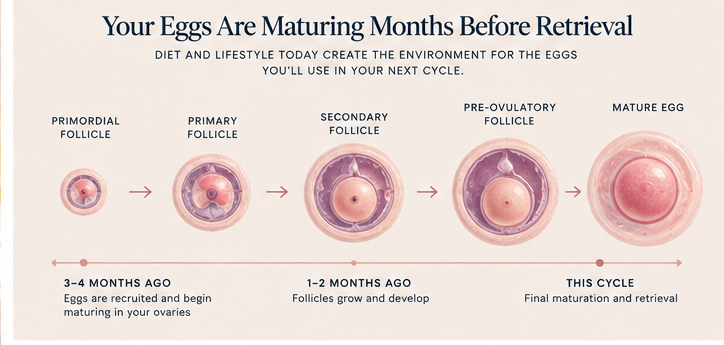
I understand why. It feels like action. It feels like taking control. And in some ways, it is. But here is the biological reality that I think women deserve to know much earlier: the eggs that will be retrieved in your next cycle were essentially recruited from your follicular pool three to four months ago. The environment they matured in — the nutrients available, the levels of oxidative stress in your body, the inflammation markers circulating in your blood — was decided months before you walked into the clinic.
This is not discouraging news. It is actually deeply empowering news, if you hear it at the right time. Which is why I want to have this conversation with you now — not the month before you need it.
---
The mechanism: why does any of this matter to an egg?
To understand why diet and lifestyle affect egg quality, you have to understand one concept: oxidative stress.
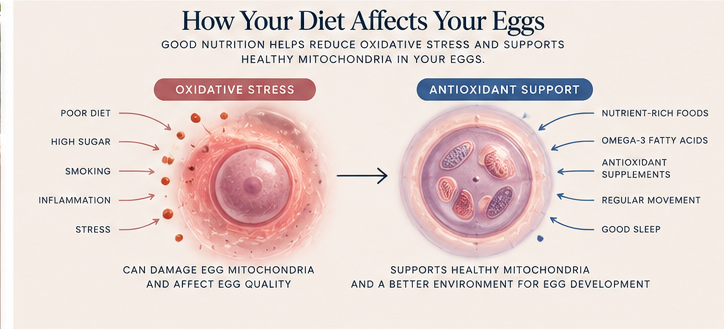
Every cell in your body — including your eggs — is constantly producing small molecules called reactive oxygen species (ROS) as a by-product of normal metabolism. In small amounts, these are fine. But when ROS build up faster than your body can neutralise them, they start damaging cells — including the mitochondria inside your eggs.
Why do mitochondria matter for eggs specifically? Because an egg needs an enormous amount of energy to mature, be fertilised, and develop into a healthy embryo. This energy is produced by mitochondria. When mitochondria are damaged by oxidative stress, the egg's ability to divide correctly, avoid chromosomal errors, and ultimately develop into a healthy pregnancy is compromised.
Oxidative stress in the body is worsened by: poor diet, high sugar intake, smoking, chronic inflammation, excess body fat, poor sleep, and unmanaged stress. It is reduced by: antioxidant-rich foods, certain supplements, moderate physical activity, and a lifestyle that keeps inflammation in check.
So when we talk about diet and fertility, what we are really talking about is: how do we reduce the oxidative load on the eggs that are quietly maturing in your ovaries right now?
"The eggs that will be retrieved in your next cycle began maturing three to four months ago. The environment you created for them — through food, movement, and lifestyle — matters more than anything you change in the final weeks."
---
The foundation: what your plate should look like
There is no single "fertility diet." But there is a clear pattern in the research: women who follow a Mediterranean-style eating pattern — rich in whole foods, plant-based proteins, healthy fats, and complex carbohydrates — have consistently better fertility outcomes.
For the Indian woman reading this, the good news is that a traditional Indian diet is actually not far from this. Dals, sabzis, whole grains, fermented foods, and spices like turmeric that have anti-inflammatory properties — these are genuinely good for your reproductive health. The issue is usually what has been added over time: refined flour, excess sugar, ultra-processed snacks, and seed oils.
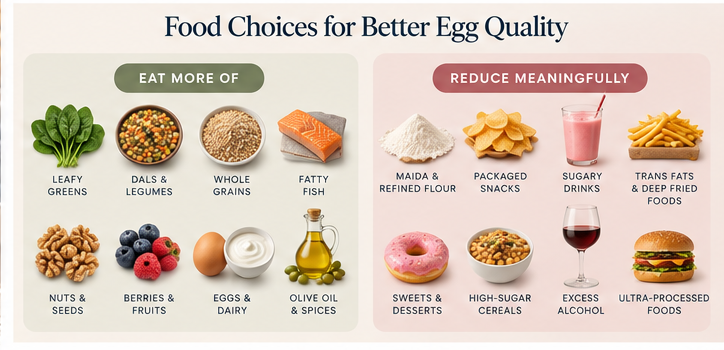
Eat more of:
- All dal and legumes
- Leafy greens (palak, methi, kale)
- Whole grains (jowar, bajra, brown rice)
- Fatty fish (salmon, sardines, mackerel)
- Walnuts, chia, flaxseeds
- Berries and seasonal fruit
- Eggs and full-fat dairy
- Turmeric, ginger, garlic
- Avocado and olive oil
Reduce meaningfully:
- Maida — all forms of it
- Packaged biscuits, namkeen, chips
- Sugary drinks (including juices)
- Trans fats (vanaspati, margarine)
- Excess alcohol
- High-sugar breakfast cereals
- Deep-fried foods daily
One specific thing the research is clear on: refined carbohydrates and high sugar intake directly worsen insulin resistance, which in turn disrupts ovulation and egg quality. This is especially relevant for Indian women, who are genetically predisposed to insulin resistance at lower BMIs than Western populations. You do not have to be overweight to have metabolically unhealthy blood sugar. Paying attention to this is not optional — it is foundational.
A note on protein: Adequate protein is essential for hormone production. Many Indian women — particularly vegetarians — are chronically under-eating protein. Aim for at least 1g of protein per kg of body weight per day. Dal alone is usually not enough. Think: paneer, curd, eggs, legumes in combination, or a quality protein supplement if needed.
---
The supplements that have real evidence
I want to be careful here, because this is an area where a lot of noise exists. Every fertility clinic has a different protocol, every influencer has a different stack, and women end up spending a lot of money on things that may or may not be doing anything.
Here are the supplements where the evidence is clearest.
CoQ10 — 100–300mg daily, at least 3 months prior
The most researched supplement in this space. CoQ10 is a naturally occurring antioxidant that sits inside your mitochondria and helps them produce energy. Its levels decline with age — right when egg quality starts to matter most. A 2024 systematic review of over 1,500 women found that CoQ10 improved egg quality, embryo quality, and in some cases, pregnancy rates in women with diminished ovarian reserve. Research suggests optimal effects require at least three months of supplementation before a retrieval cycle.
Folate (not folic acid) — 400–800mcg methylfolate daily
Most people know folate as "the neural tube defect supplement." But its role in fertility begins before conception — folate is essential for DNA synthesis and cell division in the developing egg. A key distinction: methylfolate (the active form) is better absorbed than synthetic folic acid, especially for the significant portion of the Indian population carrying MTHFR gene variants that impair folic acid conversion.
**Vitamin D — test first, then supplement accordingly**
Vitamin D deficiency is extremely common in urban Indian women — ironic, given how much sunlight we technically have access to, but most of us are indoors all day. Vitamin D plays a role in ovarian function, egg maturation, and implantation. Deficiency has been linked to impaired follicle development and increased miscarriage risk. Get your 25-OH Vitamin D level tested. Do not guess and supplement — high doses without deficiency are not helpful.
**Omega-3 Fatty Acids — 1–2g EPA/DHA daily**
These anti-inflammatory fats support the integrity of the egg cell membrane and have been linked to better ovarian reserve markers. For vegetarians, an algae-based DHA supplement is a clean alternative to fish oil. For others, fatty fish three times a week covers much of this.
Vitamin E — 200–400IU daily
A fat-soluble antioxidant that protects egg cell membranes from oxidative damage. Best obtained through diet where possible — almonds, sunflower seeds, and wheat germ are good sources.
Iron + B12 — test first; dose based on levels
Anaemia — both iron-deficiency and B12-deficiency types — is alarmingly common in Indian women and often silently affects cycle regularity and egg development. B12 deficiency in vegetarians is near-universal without supplementation. Test, do not assume. And if you are deficient, treat it properly — not just with a multivitamin.
On timing — this is the part most women miss: A follicle takes approximately 90 days to mature from its earliest recruitable stage to a retrievable egg. The supplements and dietary habits you maintain during those three months are what shape that egg's quality. Starting CoQ10 two weeks before your egg retrieval is not meaningless — but it is not the same as having taken it for three months. This is not a reason to wait until you are ready to try. It is a reason to start now.
---
Exercise: the relationship is more nuanced than you think
Most conversations about exercise and fertility focus on one of two extremes: "exercise is good for you, so exercise more" or "don't exercise during IVF." The reality is more specific, and more interesting.
Moderate, regular physical activity is genuinely protective for fertility. It improves insulin sensitivity, lowers inflammation, supports hormonal balance, and has been shown to positively influence ovarian reserve markers. One study found that women who engaged in two hours of moderate activity per week were 15% more likely to conceive than sedentary women over the same time frame.
However — vigorous exercise at high volumes does the opposite. The same research found that women exercising vigorously for more than five hours per week had a 32% lower chance of conception. The mechanism is hormonal: excessive training raises cortisol, suppresses GnRH (the hormone that signals your brain to trigger ovulation), and can result in missed ovulation or short luteal phases.
- Sedentary: No movement most days. Increases insulin resistance, worsens inflammation, negatively affects hormonal balance.
- Moderate (the sweet spot): 150 min/week of brisk walking, yoga, swimming, light resistance training. Supports ovulation, insulin sensitivity, and stress hormones.
- Excessive: 5+ hours/week of vigorous training. Raises cortisol, suppresses ovulatory hormones. Can cause irregular cycles or missed ovulation.
Moving your body most days, at a pace where you are slightly breathless but could hold a conversation, is the goal. Brisk walking, cycling, yoga, dancing, swimming — these all count. Strength training twice a week adds significant benefit because muscle tissue improves insulin sensitivity.
What about yoga specifically? There is no large randomised trial proving that yoga improves egg quality directly. But yoga's role in reducing cortisol, improving parasympathetic nervous system activity, and reducing the chronic stress that disrupts hormonal signalling is well-documented. For Indian women who are often managing career, family expectations, and personal life simultaneously — a calm nervous system is a more fertile environment.
---
The two lifestyle factors that rarely get discussed
Sleep
Melatonin — the hormone your body produces during deep sleep — is also present in follicular fluid and acts as an antioxidant that protects the egg from oxidative damage. Poor sleep raises cortisol, disrupts insulin sensitivity within days, and reduces the melatonin available to your developing follicles. Chronic poor sleep is not a minor inconvenience — it is a physiological environment that makes egg development harder.
Seven to eight hours of consistent sleep matters for fertility. Not as a soft suggestion. As a non-negotiable.
Endocrine disruptors
Chemicals like BPA (found in plastics), phthalates (found in fragrances and cosmetics), and pesticide residues mimic oestrogen in the body and disrupt the delicate hormonal environment that egg development depends on.
You cannot eliminate exposure entirely — but you can meaningfully reduce it. Store food in glass rather than plastic, avoid heating food in plastic containers, choose fragrance-free personal care products where possible, and wash produce thoroughly. These are not dramatic lifestyle overhauls. They are small, consistent choices.
---
A word of honesty — because I think you deserve it
Everything in this article describes real, evidence-supported levers. They are worth pulling. I genuinely believe that women who invest in this foundation give themselves better conditions for fertility — whether they conceive naturally, freeze their eggs, or go through IVF.
But I also want to be clear: none of this removes the impact of age on egg quality. None of it assures a particular outcome. Some women do everything right — eat well, supplement thoughtfully, move regularly, sleep enough — and still face challenges. Fertility involves factors that are simply not within our control, including genetics, chromosomal errors that are random, and the natural decline in ovarian reserve that begins in your 30s regardless of lifestyle.
What lifestyle and nutrition do is reduce the modifiable risk. They create the best possible conditions within whatever biological reality you are working with. That distinction matters, because women who believe these changes assures success can feel betrayed when they do not. And women who believe nothing I do matters miss the real, meaningful gains that are available to them.
The truth sits between those two extremes. And most good medicine does.
---
If there is one thing I want you to take away from this: the month before an egg retrieval or IVF cycle is not when this work begins. It begins now, in the ordinary months of your life, when no one is watching your plate or your sleep or your stress levels. That is when the eggs are being built.
---
References
1. Ben-Meir et al. CoQ10 restores oocyte mitochondrial function and fertility during reproductive aging. Aging Cell, 2015.
2. Skoracka et al. Female Fertility and the Nutritional Approach. Advances in Nutrition, 2021.
3. Kawwass et al. Relationship between nutrition and reproduction. RBMO, 2020.
4. Lin et al. Clinical evidence of CoQ10 pretreatment for women with DOR undergoing IVF/ICSI. Annals of Medicine, 2024.
5. Woodside et al. The Effect of Nutrient Supplementation on Female Fertility. Cureus, 2024.
6. Nutritional Interventions for Enhancing Female Fertility — Comprehensive Review. PubMed, 2025.
7. Mussawar et al. The Effect of Moderate Physical Activity on Ovarian Reserve Markers. PMC, 2017.
8. Mussawar et al. The effect of physical activity on fertility: a mini-review. Fertility & Sterility Reports, 2023.
Last reviewed: 20/10/2026
Have a question this raised?
The best place for anything specific to you is a consultation, in Mumbai or by video across India.